

Good Books with Good Covers
Titles I Love Inside and Out


Before I was a graphic designer, I was a reader. This is, ultimately, why I design books—it sure ain’t the money.
There are few greater joys for me than when A) I love a book, and B) I also love its cover. This isn’t necessarily rare, but it’s easy to be disappointed by a book with a great cover and some books I adore have just fine, or even bad, book jackets.
Here is a list of books I love, in no particular order, with covers I also love.1
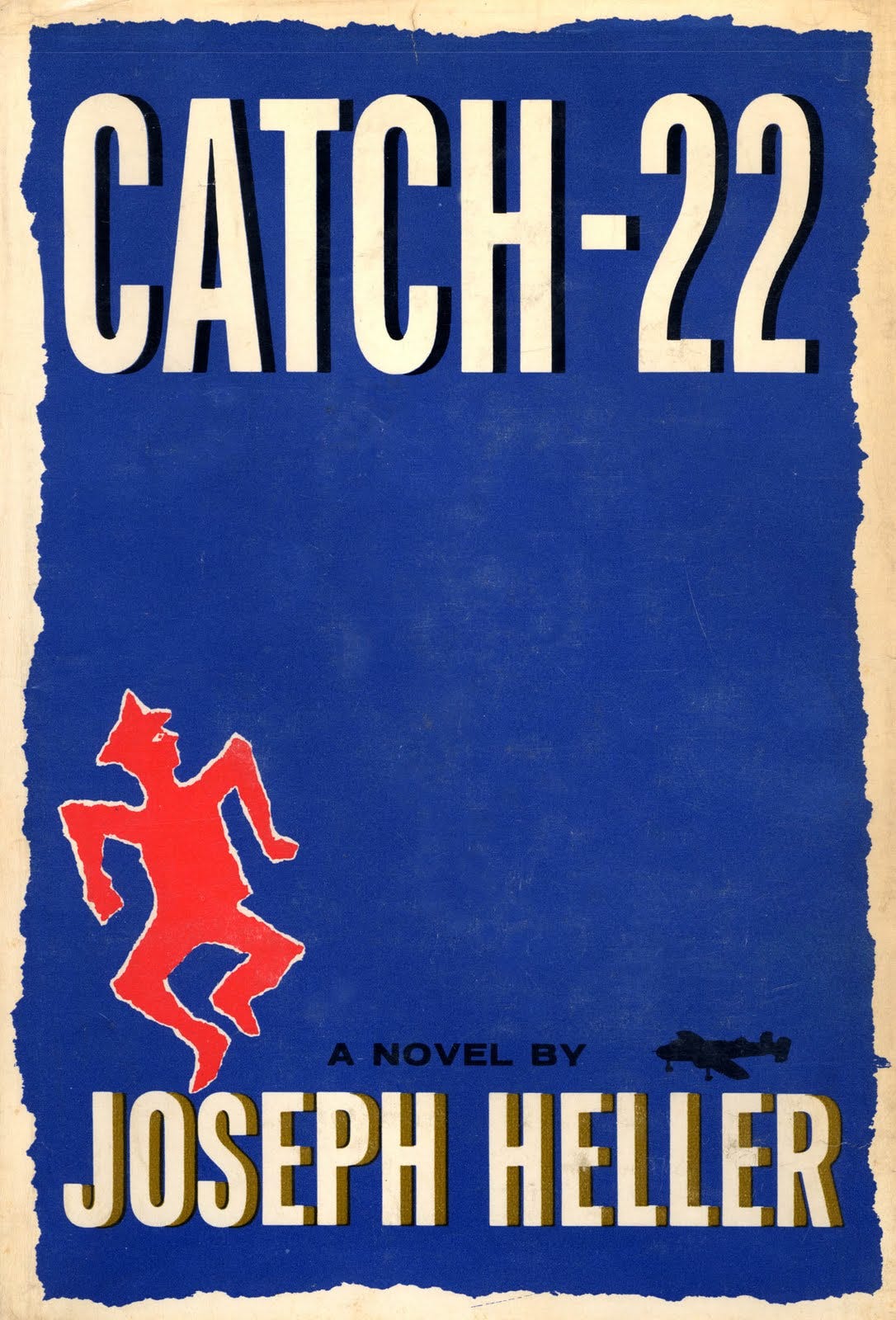
Catch-22 by Joseph Heller
Cover designer: Paul Bacon
Book description: Set in Italy during World War II, this is the story of the incomparable, malingering bombardier, Yossarian, a hero who is furious because thousands of people he has never met are trying to kill him. But his real problem is not the enemy—it is his own army, which keeps increasing the number of missions the men must fly to complete their service. Yet if Yossarian makes any attempt to excuse himself from the perilous missions he’s assigned, he’ll be in violation of Catch-22, a hilariously sinister bureaucratic rule: a man is considered insane if he willingly continues to fly dangerous combat missions, but if he makes a formal request to be removed from duty, he is proven sane and therefore ineligible to be relieved.

Know the Mother: Stories by Desiree Cooper
Cover designer: Bryce Schimanski
Book description: Short, searing glimpses of how race and gender shadow even the most intimate moments of women’s lives.
While a mother can be defined as a creator, a nurturer, a protector—at the center of each mother is an individual who is attempting to manage her own fears, desires, and responsibilities in different and sometimes unexpected ways. In Know the Mother, author Desiree Cooper explores the complex archetype of the mother in all of her incarnations. In a collage of meditative stories, women—both black and white—find themselves wedged between their own yearnings and their roles as daughters, sisters, grandmothers, and wives.
In this heart-wrenching collection, Cooper reveals that gender and race are often unanticipated interlopers in family life. An anxious mother reflects on her prenatal fantasies of suicide while waiting for her daughter to come home late one night. A lawyer miscarries during a conference call and must proceed as though nothing has happened. On a rare night out with her husband, a new mother tries convincing herself that everything is still the same. A politician's wife's thoughts turn to slavery as she contemplates her own escape: "Even Harriet Tubman had realized that freedom wasn't worth the price of abandoning her family, so she'd come back home. She'd risked it all for love." With her lyrical and carefully crafted prose, Cooper's stories provide truths without sermon and invite empathy without sentimentality.
Know the Mother explores the intersection of race and gender in vignettes that pull you in and then are gone in an instant. Readers of short fiction will appreciate this deeply felt collection.
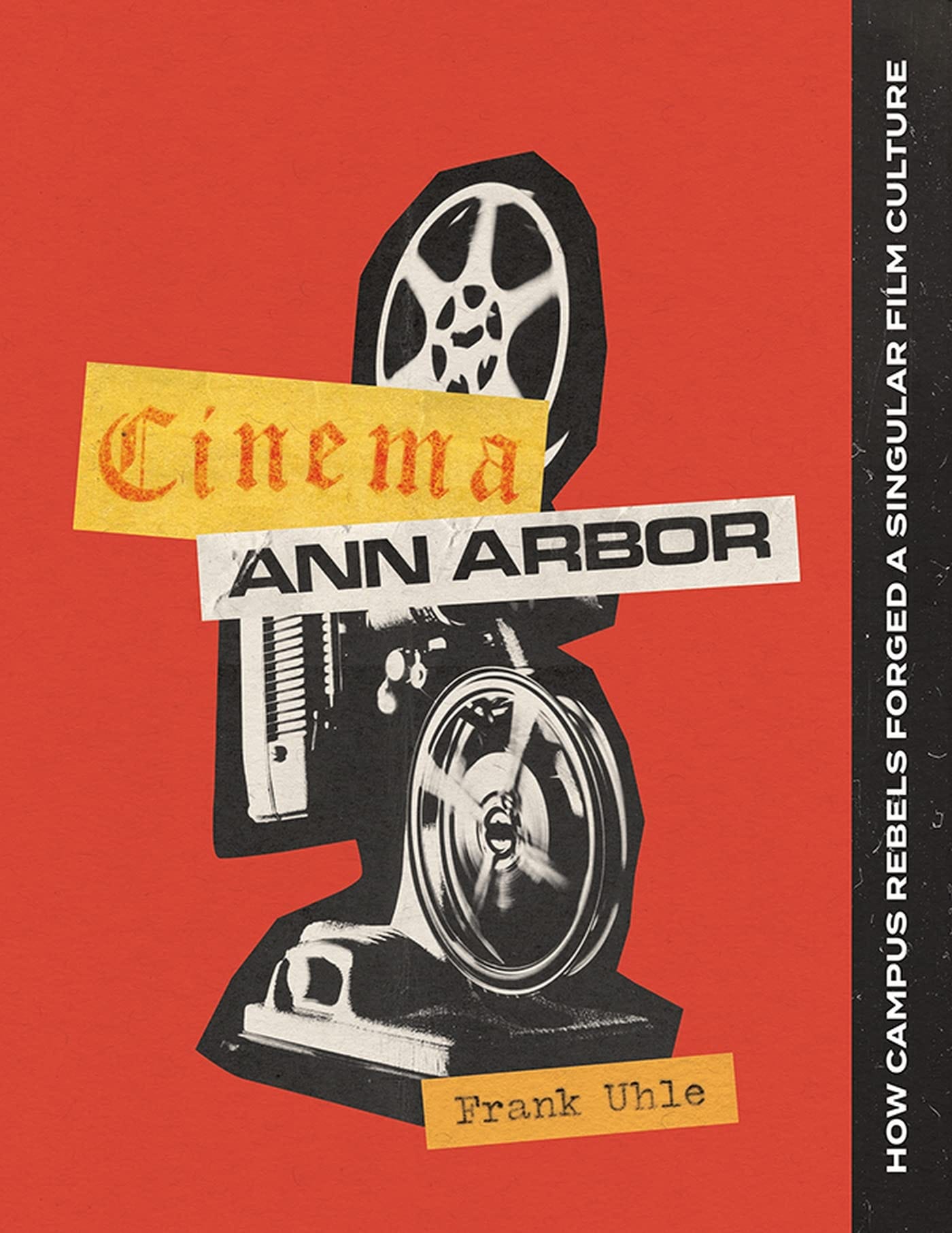
Cinema Ann Arbor by Frank Uhle
Cover designer: Nathaniel Roy
Okay, I designed this one. Is that tacky? Probably. I don’t care. I love this cover and I love this book.
Book description: Ann Arbor, long known for its political and cultural activism, has an equally compelling history of engagement with film and media. In their quest to show art and independent films and in their efforts to raise money in the name of artistic freedom, local and campus societies pushed the boundaries of conformity. Delving into almost one hundred years of rarely glimpsed history, Cinema Ann Arbor melds interviews, deep archival research, and over four hundred images into a vivid history of film in one extraordinary town. These stories, told with urgency and exquisite detail, are firsthand accounts of the unforgettable people who created Ann Arbor’s magnificent twentieth-century film scene.
Featuring interviews with filmmaker Ken Burns, Oscar-nominated editor Jay Cassidy, producer John Sloss, and more, this masterpiece provides insights into how a Midwestern college town developed a robust underground art film community that inspired those across the country. Variety’s Owen Glieberman says, “Frank Uhle has captured the moment when cinema became, for a new generation, a kind of religion, with its own rituals and sacred texts and a spirit of exploratory mystery that has all but vanished from the culture.”
This is a must-have book for cinema and media aficionados, film archivists, and anyone interested in the cultural history of Ann Arbor.
This book was published in collaboration with Fifth Avenue Press at Ann Arbor District Library. Learn more about their publishing program here. You can also see their collection, including vintage flyers, photos, film schedules, here.
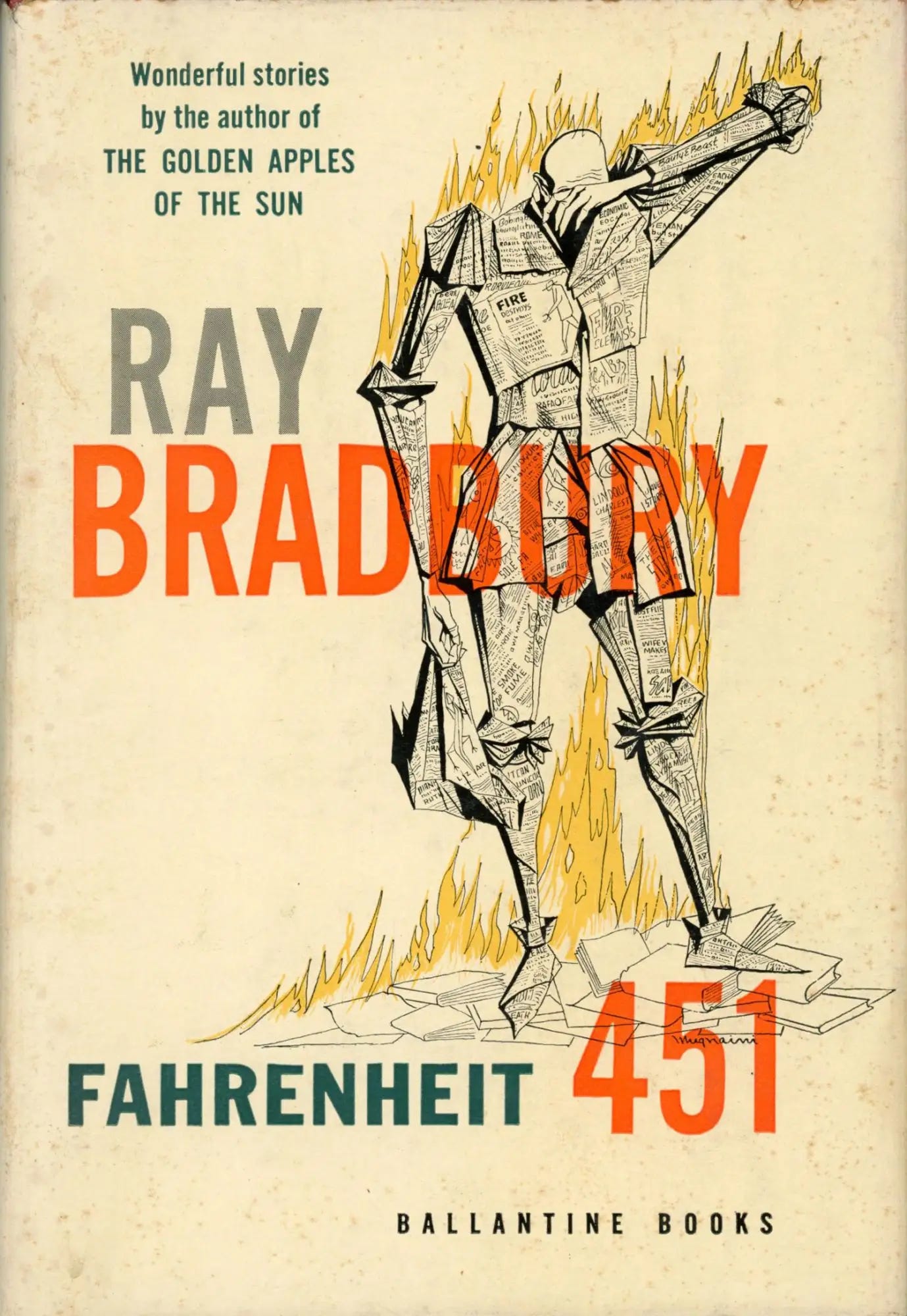

Fahrenheit 451 by Ray Bradbury
Cover artist: Joseph Mugnaini (First edition)
Cover designer: Matt Owen (60th anniversary edition)
For the 60th Anniversary Edition, Simon & Schuster held a competition for the cover. Matt Owen, of Little Rock, Arkansas, won.
Book description: Guy Montag is a fireman. His job is to destroy the most illegal of commodities, the printed book, along with the houses in which they are hidden. Montag never questions the destruction and ruin his actions produce, returning each day to his bland life and wife, Mildred, who spends all day with her television “family.” But when he meets an eccentric young neighbor, Clarisse, who introduces him to a past where people didn’t live in fear and to a present where one sees the world through the ideas in books instead of the mindless chatter of television, Montag begins to question everything he has ever known.

The Library Book by Susan Orlean
Cover designer: Lauren Peters-Collaer
Book description: On the morning of April 28, 1986, a fire alarm sounded in the Los Angeles Public Library. The fire was disastrous: it reached two thousand degrees and burned for more than seven hours. By the time it was extinguished, it had consumed four hundred thousand books and damaged seven hundred thousand more. Investigators descended on the scene, but more than thirty years later, the mystery remains: Did someone purposefully set fire to the library—and if so, who?
Weaving her lifelong love of books and reading into an investigation of the fire, award-winning New Yorker reporter and New York Times bestselling author Susan Orlean delivers a “delightful…reflection on the past, present, and future of libraries in America” (New York magazine) that manages to tell the broader story of libraries and librarians in a way that has never been done before.
In the “exquisitely written, consistently entertaining” (The New York Times) The Library Book, Orlean chronicles the LAPL fire and its aftermath to showcase the larger, crucial role that libraries play in our lives; delves into the evolution of libraries; brings each department of the library to vivid life; studies arson and attempts to burn a copy of a book herself; and reexamines the case of Harry Peak, the blond-haired actor long suspected of setting fire to the LAPL more than thirty years ago.
“A book lover’s dream…an ambitiously researched, elegantly written book that serves as a portal into a place of history, drama, culture, and stories” (Star Tribune, Minneapolis), Susan Orlean’s thrilling journey through the stacks reveals how these beloved institutions provide much more than just books—and why they remain an essential part of the heart, mind, and soul of our country.
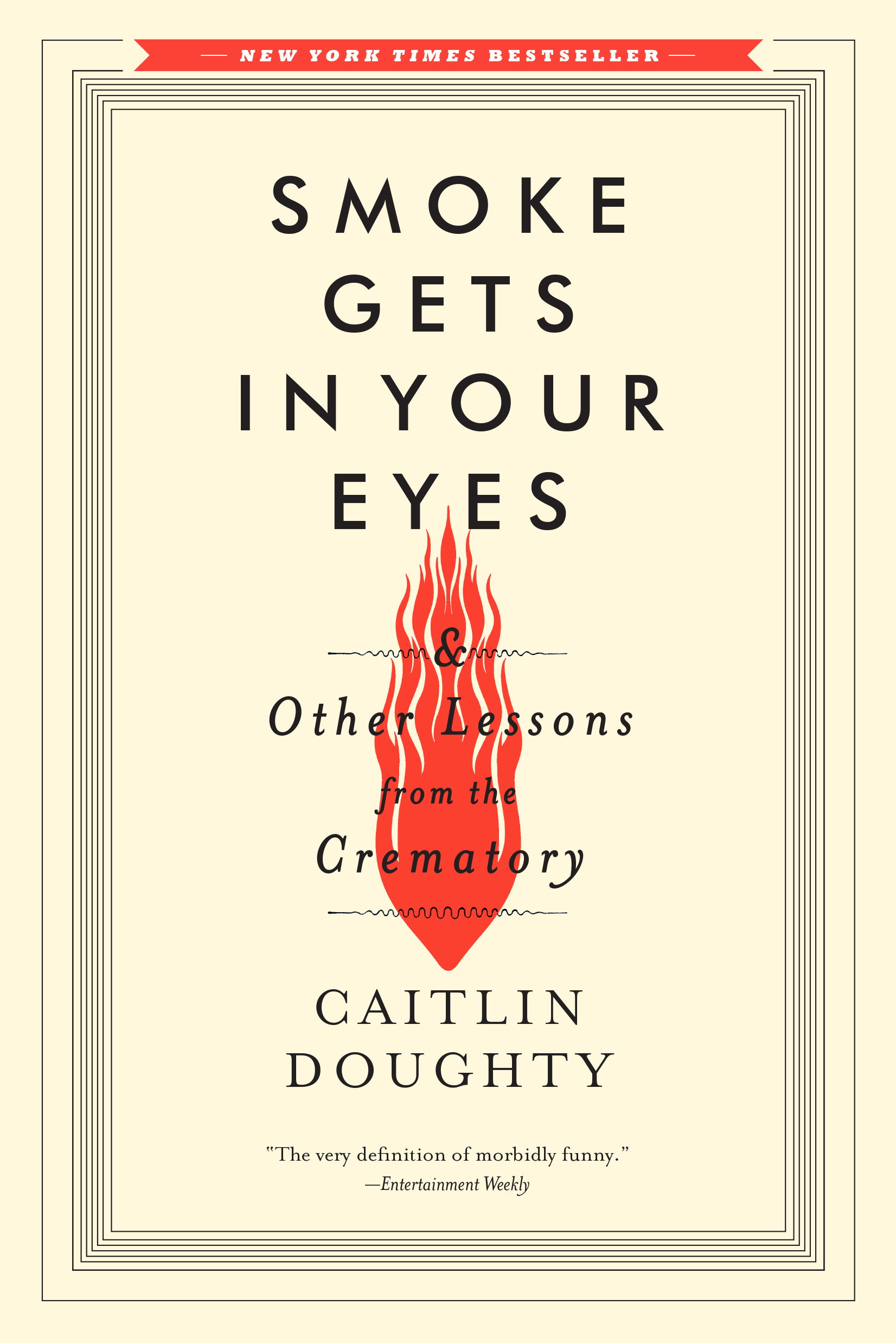
Smoke Gets in Your Eyes by Caitlin Doughty
Cover designer: David High
Book description: Armed with a degree in medieval history and a flair for the macabre, Caitlin Doughty took a job at a crematory and turned morbid curiosity into her life’s work. She cared for bodies of every color, shape, and affliction, and became an intrepid explorer in the world of the dead. In this best-selling memoir, brimming with gallows humor and vivid characters, she marvels at the gruesome history of undertaking and relates her unique coming-of-age story with bold curiosity and mordant wit. By turns hilarious, dark, and uplifting, Smoke Gets in Your Eyes reveals how the fear of dying warps our society and "will make you reconsider how our culture treats the dead" (San Francisco Chronicle).

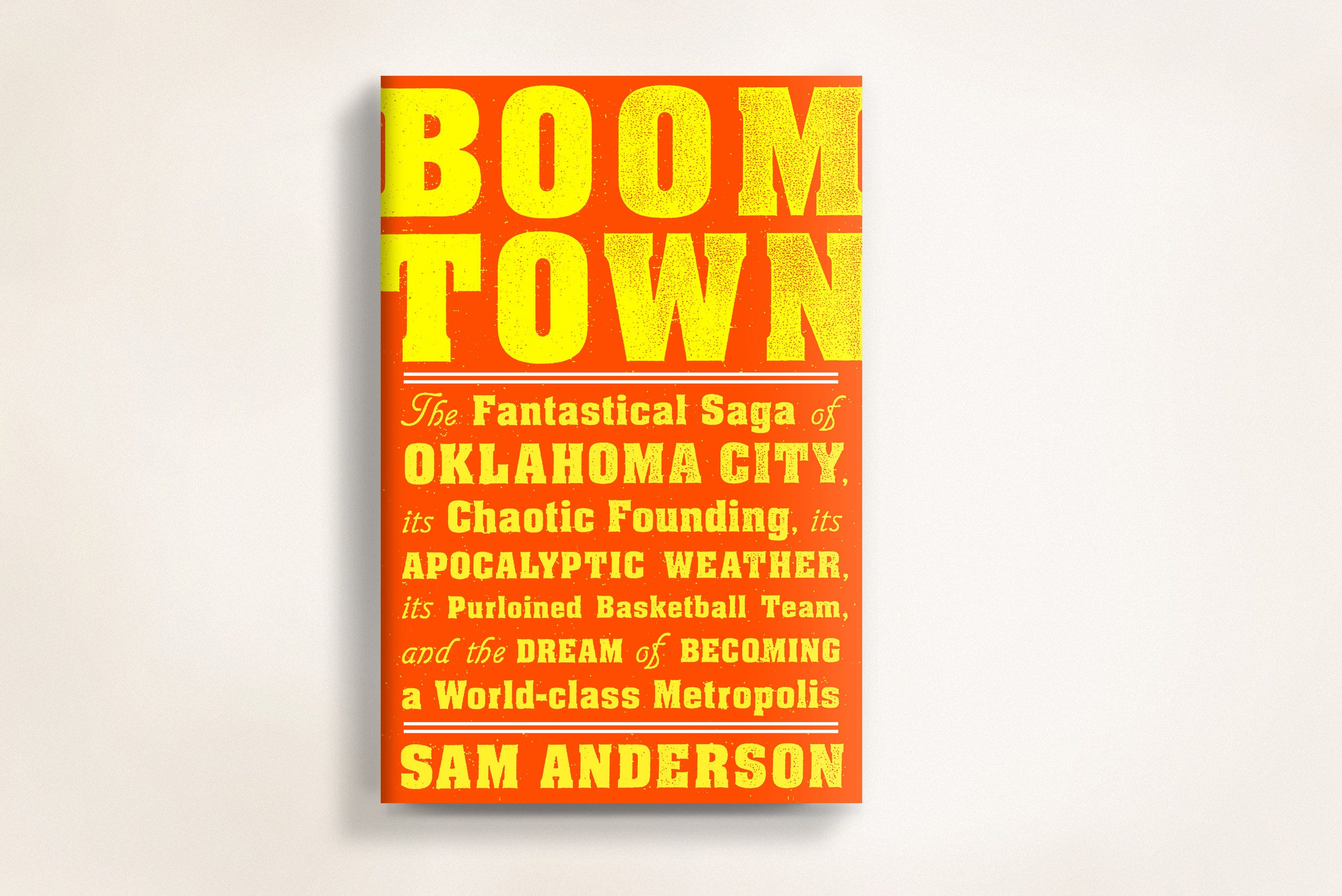
Boom Town by Sam Anderson
Cover designer: Michael Morris
Book description: Oklahoma City was born from chaos. It was founded in a bizarre but momentous “Land Run” in 1889, when thousands of people lined up along the borders of Oklahoma Territory and rushed in at noon to stake their claims. Since then, it has been a city torn between the wild energy that drives its outsized ambitions, and the forces of order that seek sustainable progress. Nowhere was this dynamic better realized than in the drama of the Oklahoma City Thunder basketball team’s 2012-13 season, when the Thunder’s brilliant general manager, Sam Presti, ignited a firestorm by trading future superstar James Harden just days before the first game. Presti’s all-in gamble on “the Process”—the patient, methodical management style that dictated the trade as the team’s best hope for long-term greatness—kicked off a pivotal year in the city’s history, one that would include pitched battles over urban planning, a series of cataclysmic tornadoes, and the frenzied hope that an NBA championship might finally deliver the glory of which the city had always dreamed.
Boom Town announces the arrival of an exciting literary voice. Sam Anderson, former book critic for New York magazine and now a staff writer at the New York Times magazine, unfolds an idiosyncratic mix of American history, sports reporting, urban studies, gonzo memoir, and much more to tell the strange but compelling story of an American city whose unique mix of geography and history make it a fascinating microcosm of the democratic experiment. Filled with characters ranging from NBA superstars Kevin Durant and Russell Westbrook; to Flaming Lips oddball frontman Wayne Coyne; to legendary Great Plains meteorologist Gary England; to Stanley Draper, Oklahoma City’s would-be Robert Moses; to civil rights activist Clara Luper; to the citizens and public servants who survived the notorious 1995 bombing of the Alfred P. Murrah federal building, Boom Town offers a remarkable look at the urban tapestry woven from control and chaos, sports and civics.
Bonus: Here are some unused covers featured on Michael Morris’s website:

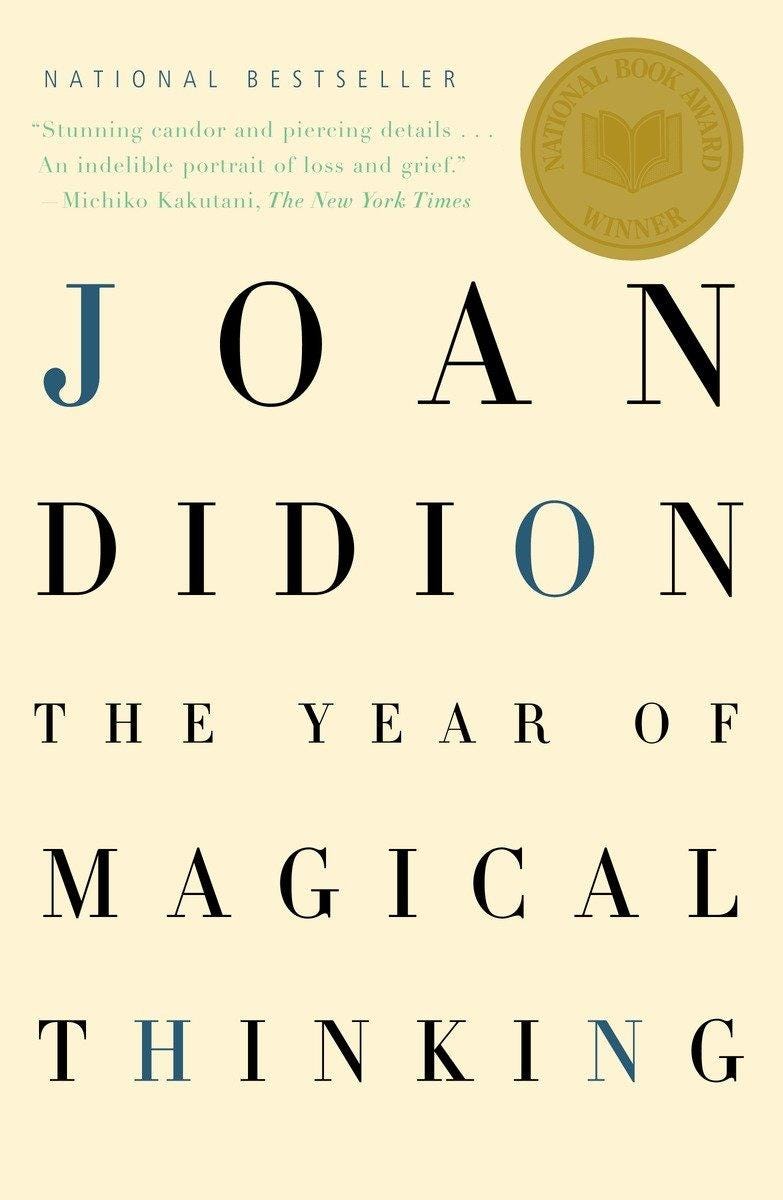
The Year of Magical Thinking by Joan Didion
Cover designer: Carol Devine Carson
Book description: Several days before Christmas 2003, John Gregory Dunne and Joan Didion saw their only daughter, Quintana, fall ill with what seemed at first flu, then pneumonia, then complete septic shock. She was put into an induced coma and placed on life support. Days later—the night before New Year’s Eve—the Dunnes were just sitting down to dinner after visiting the hospital when John Gregory Dunne suffered a massive and fatal coronary. In a second, this close, symbiotic partnership of forty years was over. Four weeks later, their daughter pulled through. Two months after that, arriving at LAX, she collapsed and underwent six hours of brain surgery at UCLA Medical Center to relieve a massive hematoma.
This powerful book is Didion’ s attempt to make sense of the “weeks and then months that cut loose any fixed idea I ever had about death, about illness … about marriage and children and memory … about the shallowness of sanity, about life itself.
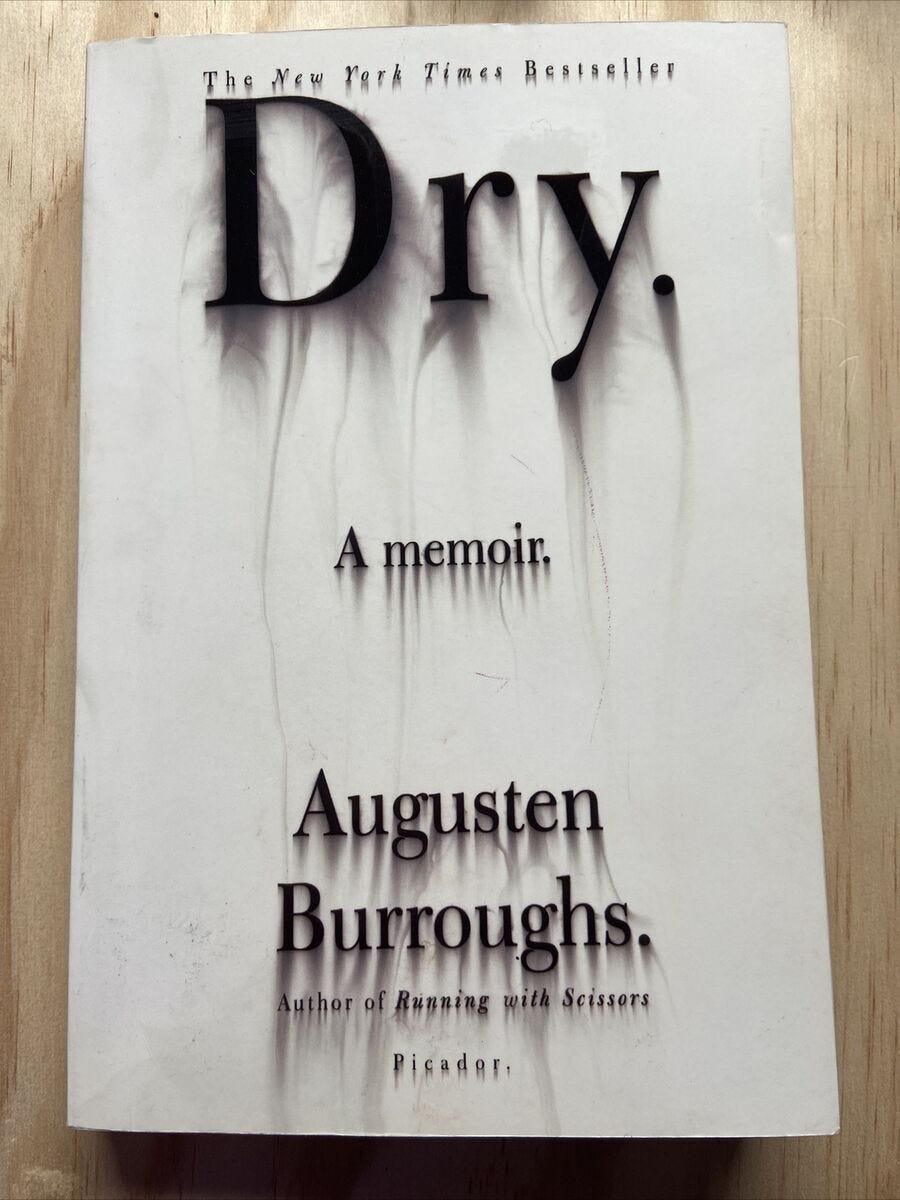
Dry by Augusten Burroughs
Cover designer: Chip Kidd
Book description: You may not know it, but you’ve met Augusten Burroughs. You’ve seen him on the street, in bars, on the subway, at restaurants: a twentysomething guy, nice suit, works in advertising. Regular. Ordinary. But when the ordinary person had two drinks, Augusten was circling the drain by having twelve; when the ordinary person went home at midnight, Augusten never went home at all. Loud, distracting ties, automated wake-up calls and cologne on the tongue could only hide so much for so long. At the request (well, it wasn’t really a request) of his employers, Augusten lands in rehab, where his dreams of group therapy with Robert Downey Jr. are immediately dashed by grim reality of fluorescent lighting and paper hospital slippers. But when Augusten is forced to examine himself, something actually starts to click and that's when he finds himself in the worst trouble of all. Because when his thirty days are up, he has to return to his same drunken Manhattan life—and live it sober. What follows is a memoir that’s as moving as it is funny, as heartbreaking as it is true. Dry is the story of love, loss, and Starbucks as a Higher Power.

Rattlebone by Maxine Clair
Cover designer: Peter Mendelsund
This cover is part of an editorial series from McNally Editions, but I love this one in particular. The section of the cover with images is a 3/4 book jacket and the yellow-brown portion is a plain-looking paperback underneath.
Book description: Irene Wilson knows that a “no-name invisible something” has settled over her parents’ marriage and suspects her glamorous new teacher is to blame. Irene is not alone in her suspicions. In the town of Rattlebone, a small Black neighborhood of Kansas City, secrets are hard to keep and growing up is a community affair.
As Irene is initiated into adult passion and loss, her family story takes its place in a tightly woven tapestry of neighbors whose griefs and joys are as vivid as her own. Rattlebone is a one-of-a-kind triumph of American fiction, one that captures an entire world through the eyes of an unforgettable heroine.

The Girl with the Dragon Tattoo by Stieg Larson
Cover designer: Peter Mendelsund
Book description: Harriet Vanger, a scion of one of Sweden’s wealthiest families disappeared over forty years ago. All these years later, her aged uncle continues to seek the truth. He hires Mikael Blomkvist, a crusading journalist recently trapped by a libel conviction, to investigate. He is aided by the pierced and tattooed punk prodigy Lisbeth Salander. Together they tap into a vein of unfathomable iniquity and astonishing corruption.
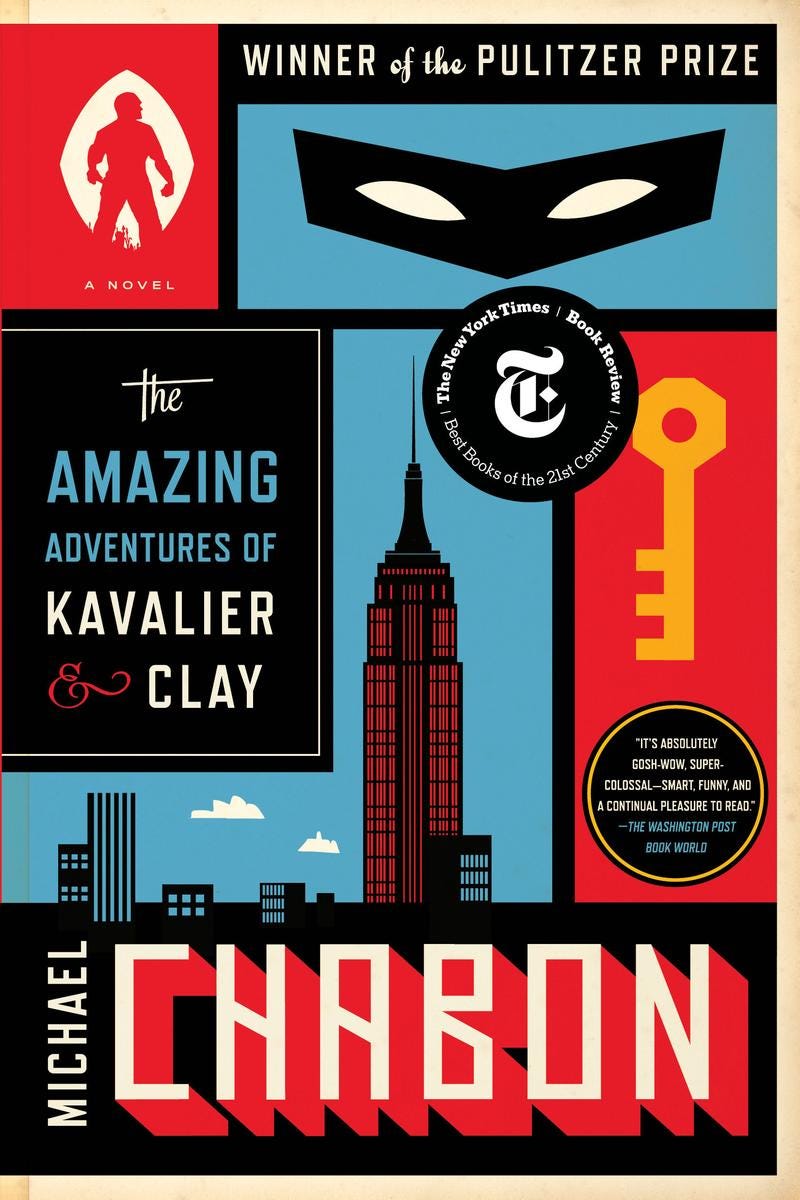
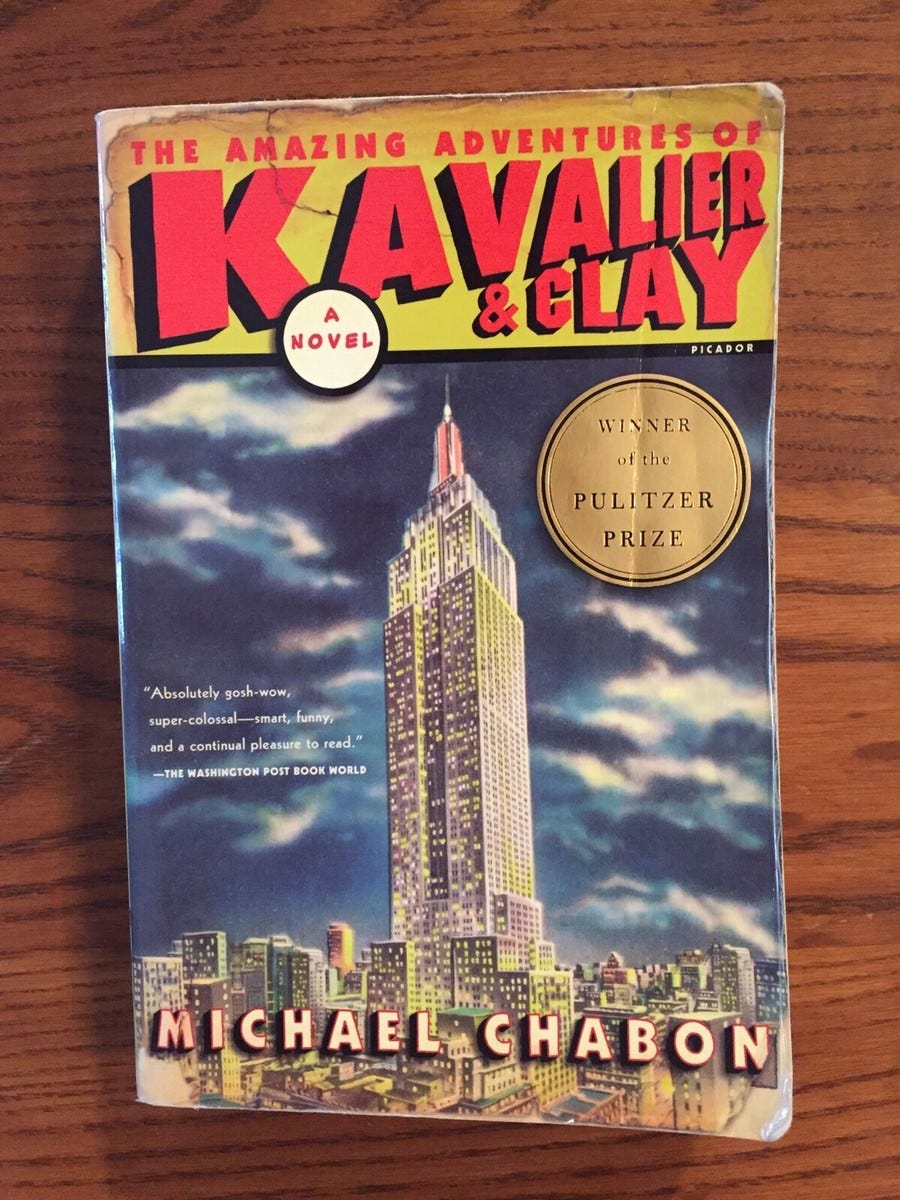
The Amazing Adventures of Kavalier and Clay by Michael Chabon
Cover designer(s): Henry Sene Yee, Will Staehle
I read the Staehle version, and I really like that cover. But it’s far sleeker than the original Henry Sene Yee version, which feels pulpier and grittier. It’s perfect.
Book description: A young escape artist and budding magician named Joe Kavalier arrives on the doorstep of his cousin, Sammy Clay. While the long shadow of Hitler falls across Europe, America is happily in thrall to the Golden Age of comic books, and in a distant corner of Brooklyn, Sammy is looking for a way to cash in on the craze. He finds the ideal partner in the aloof, artistically gifted Joe, and together they embark on an adventure that takes them deep into the heart of Manhattan, and the heart of old-fashioned American ambition. From the shared fears, dreams, and desires of two teenage boys, they spin comic book tales of the heroic, fascist-fighting Escapist and the beautiful, mysterious Luna Moth, otherworldly mistress of the night. Climbing from the streets of Brooklyn to the top of the Empire State Building, Joe and Sammy carve out lives, and careers, as vivid as cyan and magenta ink.

Thanks for Reading!
Thank you for reading! I mean it.
If you’d like to keep this newsletter going and help me say no to designing soul-sucking books about corporate events, email marketing, and raising capital, consider becoming a paid subscriber or buying me a coffee.
Until next time,
—Nathaniel
I should note here that “love” is a finicky metric. These books are not necessarily my favorites—though this list does contain a few—and I don’t love all of these books the same way. Some of these books have shaped my life; some of these books just give me a warm feeling when I remember reading them.